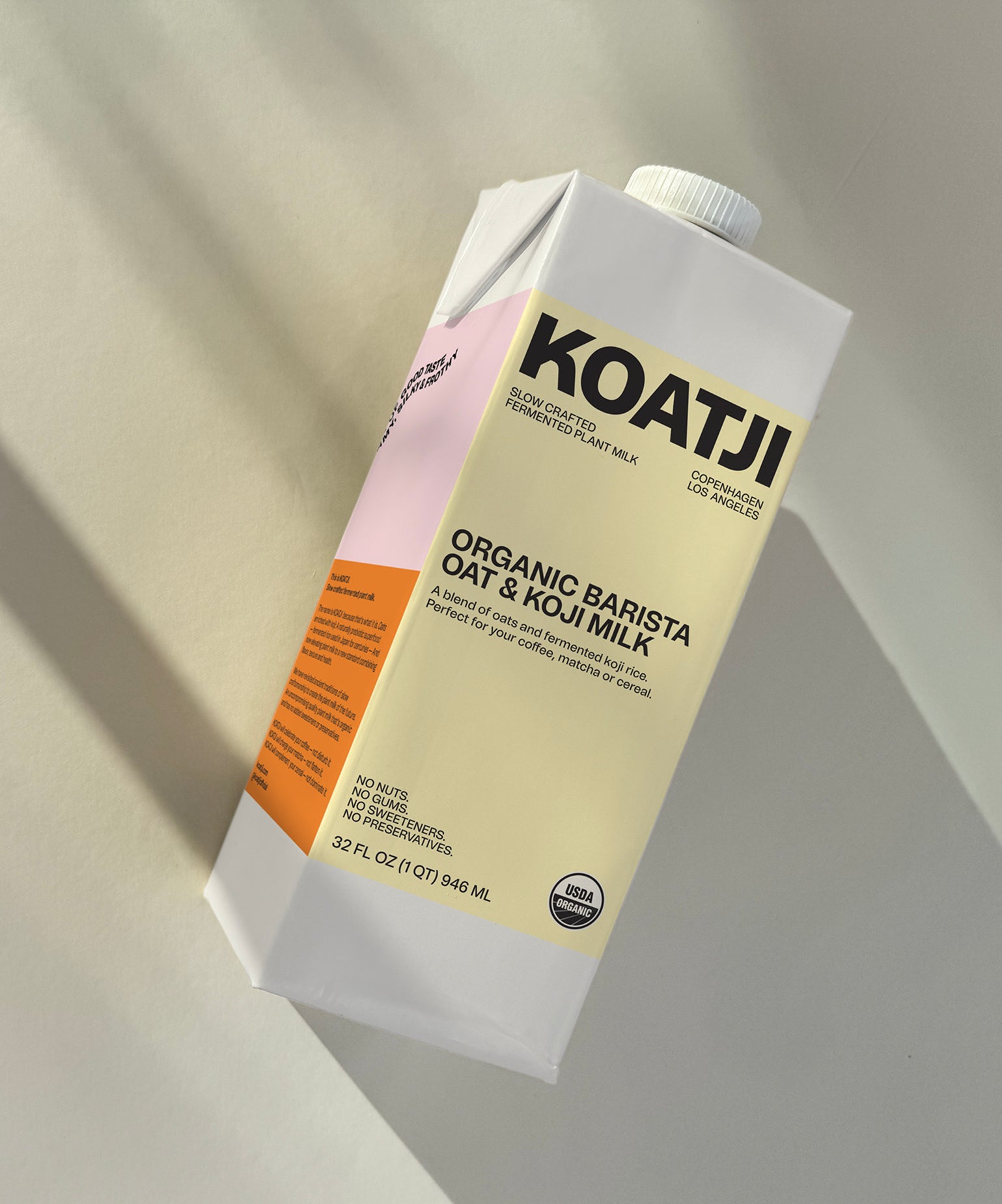
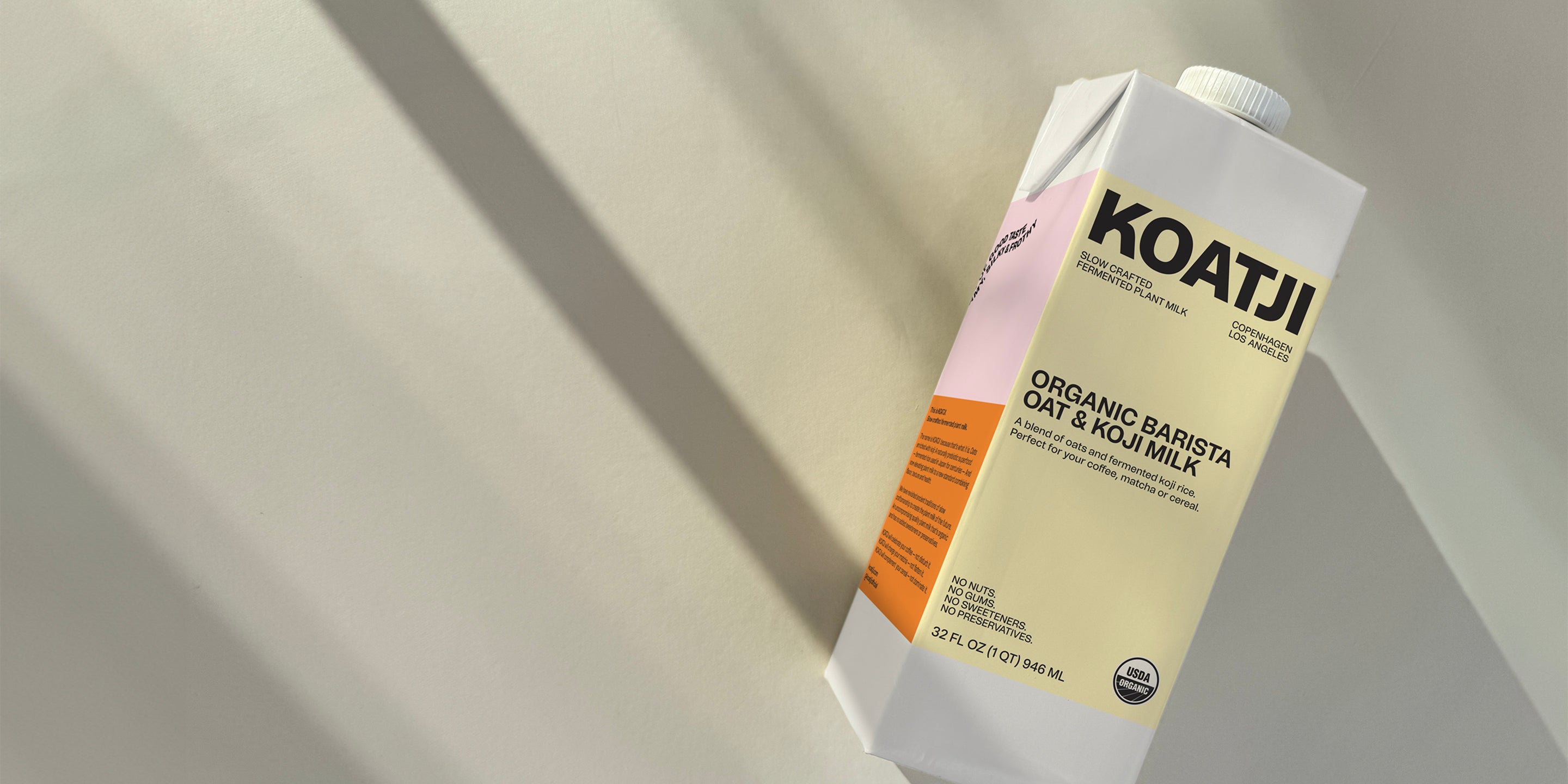
What is KOATJI?
KOATJI is a proprietary plant-based milk recipe developed over three years in our R+D lab by a team of Michelin chefs and baristas. It took more than 8000 experiments to get it just right.
Our mission: to craft a 100% organic, nutritious, plant-based milk made from sustainable ingredients that is free from any additives. The milk had to taste delicious enough to enjoy on its own, but also set a new standard for mouthfeel, foamability, and versatility at the espresso machine and in the kitchen. We have met our mission: whether Koatji is paired with coffee, matcha, cereal, or even cocktails, it a harmonious, delicious fit.
There is an industry secret in plant-milk. There’s a reason other brands employ gums, fillers, and other additives. It turns out that rethinking this paradigm, and embracing an additive-free approach is hard, but not impossible. That’s why it took us a while. The following dives into the finer details of KOATJI for those who would like to know more about this ground-breaking new product and the ingredients we use:
Oat & Koji Rice Blend (Water, Organic Oats, Organic Koji Rice, Salt), High-Oleic Organic Sunflower Oil, and Potassium Carbonate.
LET'S TALK ABOUT INGREDIENTS!
WHY ORGANIC AND NON-GMO?
By definition, USDA certified organic products are also non-GMO. At KOATJI we are big believers in organic farming methods. It assures that the soil remains healthy and avoids soil depletion which in turn results in the most nutritious crops available. In addition, the CO2 footprint from organic farming is lower than conventional farming; and lastly, there are no chances of leftover residue from pesticides and chemicals entering the harvest (a no-go in organic farming and processing.) Not only does your body benefit from eating foods free from pesticides and chemicals, but it also helps to protect our drinking water reservoirs. Organic farming is a win win win win situation and parmount to KOATJI’s design, flavor, and ethos.
WHY DON'T WE USE GUMS, STABILIZERS, PRESERVATIVES OR ADDED SUGAR?
Many plant-based drinks rely on long ingredient lists to achieve the right texture, shelf life and flavor. Gums create body. Stabilizers keep ingredients from separating. Preservatives extend shelf life. Added sugar increases sweetness. These ingredients are widely used and approved for use in food—but they reflect a different philosophy of product development.
At KOATJI, we believe every ingredient should earn its place.
We don't start with the question, "What can we add to make this recipe work?" We start with, "How can we make the recipe work with better ingredients?"
That's why we invest in carefully selected organic oats, traditional koji fermentation, and premium organic high-oleic sunflower oil. We would rather improve the ingredients and the process than rely on gums, stabilizers, preservatives or added sugar to achieve the desired result.
The few functional ingredients we do use are there for a clear and essential reason—not to imitate creaminess, disguise lower-quality ingredients, or create an artificial texture, but to help the product perform as intended.
The result is a clean-label plant milk with a short ingredient list where every ingredient has a purpose.
We know this approach costs more. We believe it's worth it.
Because great food shouldn't need more ingredients than necessary.
WHAT IS KOJI?
You know about oat milk, but Koji is a cooked grain inoculated with a fermentation culture called Aspergillus oryzae, a koji mold, used in Japanese cuisine for centuries to make sake, miso, and other fermented foods. Koji is prepared by adding koji mold to steamed grains, then carefully kept in warm, humid conditions that promote growth. The fermentation process produces over 100 types of enzymes that break down proteins into amino acids, adding umami and nuttiness to the flavor, while breaking down starches into glucose, which creates natural sweetness.
WHY DO WE USE KOJI?
Koji has been used in Japanese food culture for more than 1,000 years to make ingredients like miso, soy sauce and sake. We chose it for the same reason generations of Japanese artisans have: it transforms simple ingredients through fermentation.
Rather than relying on added sugar, flavorings or unnecessary functional ingredients, we use traditional fermentation to help develop a naturally balanced flavor with subtle sweetness and depth.
Koji is also a fascinating ingredient in its own right. During fermentation, it naturally produces a range of compounds, including B vitamins and ergothioneine—a naturally occurring compound also found in foods such as mushrooms and beans. Scientists continue to study these compounds and their role in nutrition, but we use koji primarily because it helps us make better food with fewer ingredients.
For us, koji isn't a trend. It's a time-honored ingredient that reflects our philosophy: start with better ingredients, use traditional processes, and let nature do more of the work.
WHAT ARE THE HEALTH BENEFITS OF KOJI?
The fermentation process that creates Koji yields enzymes and beneficial compounds. It’s a natural source of ergothioneine, an amino acid that works as a very effective antioxidant. Koji naturally contains essential vitamins B2 and B6.
Ergothioneine (ERGO)
Ergothioneine (ERGO) is a naturally occurring compound first identified in 1909 in ergot fungus. It's found in foods like mushrooms, beans, and koji.
B6 Vitamin
Vitamin B6, also known as pyridoxine, is one of the essential B vitamins. It's found naturally in foods like meat, fish, poultry, bananas, potatoes — and koji.
B2 Vitamin
Vitamin B2, also known as riboflavin, is one of the essential B vitamins. It's found naturally in foods like dairy products, meat, fish, leafy green vegetables — and koji.
IS KOATJI GLUTEN-FREE?
KOATJI is made with carefully selected ingredients that are naturally gluten-free.
However, we do use oats that are not certified gluten-free. While oats themselves do not contain gluten, they can be cross-contaminated with gluten-containing grains (like wheat, barley, or rye) during growing, harvesting, or processing.
We take reasonable precautions to minimize the risk of cross-contact, but we cannot guarantee that our products are completely free from traces of gluten.
If you have celiac disease or a serious gluten sensitivity, we recommend choosing products that are certified gluten-free, as they are tested to meet strict safety standards.
We’re currently working on this and hope to offer a certified gluten-free option in the near future.
WHY DOES THE LABEL MENTION “ADDED” SUGAR WHEN THERE’S NO SUGAR IN THE INGREDIENT LIST?
The FDA has changed its regulations, requiring the natural sweetness that comes from the enzymatic breakdown of starches in oats and koji rice into maltose and glucose to be labeled as “added sugar.” These natural sugars, maltose and glucose, are your body’s preferred carb-based energy source and are different from refined table sugar (sucrose), which is often referred to as “empty calories” due to its lack of nutritional benefits. (source)
Regrettably, the US Food and Drug Administration (FDA) doesn’t presently distinguish between these different types of sugar on nutrition labels. Regardless of whether it’s naturally occurring sugar or sugar added during production, all sugars are blanket-labeled as “added sugar.” Regrettably, this causes confusion in the market and explains why our product’s nutrition label indicates “added sugar” despite the fact that we haven’t added any sugar to our product.
WHY DO WE USE ORGANIC HIGH-OLEIC SUNFLOWER OIL?
Not all sunflower oils are the same.
The question isn't simply whether an oil comes from a seed. It's how it's made, the type of seed it's made from, and why it was chosen in the first place.
We use organic high-oleic sunflower oil, made from specially bred sunflower seeds that are naturally rich in oleic acid (omega-9)—the same monounsaturated fat that predominates in extra virgin olive oil. Compared with conventional sunflower oil, it contains significantly less omega-6 and a much higher proportion of monounsaturated fat.
Our oil is organic and expeller-pressed, using mechanical pressure rather than solvent extraction. We chose it because it creates a smooth texture, exceptional foam for coffee, and aligns with our philosophy of selecting ingredients for both quality and function.
We believe ingredients deserve context—not labels.
For us, it wasn't about choosing a seed oil. It was about choosing the right one.
WHY DO SEED OILS HAVE SUCH A MIXED REPUTATION?
Seed oils have become one of the most debated topics in nutrition. Much of the conversation treats them as a single category—but they're not.
The type of seed, the fatty acid profile, and how the oil is extracted and processed can vary significantly. Two sunflower oils may share the same name on the label while being very different ingredients.
Some sunflower oils are produced using solvent extraction and extensive refining to maximize yield. Others are expeller-pressed from specially bred high-oleic sunflower seeds that are naturally rich in monounsaturated fat.
That's why we believe it's more useful to ask how an oil was made than simply what plant it came from.
At KOATJI, we chose organic high-oleic sunflower oil because it delivers the performance we need while aligning with our philosophy of carefully selected, high-quality ingredients.
WHAT'S THE DIFFERENCE BETWEEN EXPELLER-PRESSED, COLD-PRESSED AND SOLVENT-EXTRACTED OILS?
The way an oil is extracted matters.
Expeller-pressed oils are extracted mechanically using pressure rather than chemical solvents. This method typically produces a lower yield than solvent extraction, but we believe it's worth it because it reflects a simpler, more natural approach to extracting oil.
Cold-pressed oils are a type of expeller-pressed oil that are extracted and kept below a controlled temperature (typically around 122°F / 50°C). The lower temperature helps preserve the oil's natural characteristics throughout the extraction process.
Solvent-extracted oils use a food-grade solvent, typically hexane, to maximize the amount of oil recovered from the seed. After extraction, the solvent is removed and the oil is refined before it reaches the consumer. This method is widely used because it is highly efficient and maximizes yield.
At KOATJI, we chose organic, expeller-pressed, high-oleic sunflower oil because it aligns with our philosophy of carefully selected ingredients and thoughtful production. The sunflower variety we use is naturally rich in oleic acid (omega-9), giving it a fatty acid profile much closer to extra virgin olive oil than conventional sunflower oil.
For us, choosing an oil wasn't just about the plant it came from—it was about how it was grown, how it was produced, and why it belonged in our recipe.
WHAT IS POTASSIUM CARBONATE?
Potassium carbonate is a naturally occurring mineral salt used in food to help regulate acidity. It is one of the few acidity regulators permitted for use in certified organic foods.
In KOATJI, we use a very small amount to help balance the natural acidity of coffee. This allows our oat and koji milk to perform better when steamed and poured into espresso, creating a smoother, more stable coffee experience.
Like every ingredient in our recipe, potassium carbonate has a clear purpose. We don't use it to create texture, mask flavor, or extend shelf life—we use it because it helps the product perform as intended.
In short, KOATJI is crafted with a focus on premium quality, sustainability, health, and flavor. We offer a unique plant-based milk that balances tradition and innovation, with genuine mission to further the wellbeing of both people and our planet.